

The AI Tools Every Podcaster Should Be Using in 2025 (And the One Thing They Can’t Do)
How to leverage artificial intelligence to supercharge your show without losing what makes it special
AI is transforming podcast production in ways that would have seemed impossible just two years ago. As someone who’s worked with hundreds of podcasters at Main Line Studios, I’ve seen firsthand how the right AI tools can turn a good show into a great one—and free up creators to focus on what they do best.
Here’s your complete guide to the AI tools that are actually worth your time (and budget) in 2025 and beyond.
Essential AI Tools for Podcast Production
1. Transcription & Show Notes
Tools: Otter.ai, Rev, Descript, Podium Podcast Why it matters: What used to take hours now takes minutes. These tools don’t just transcribe—they can generate timestamps, identify speakers, and even create show notes automatically.
What we use: At Main Line Studios, we use Podium Podcast for our in-house show “Gurus and Game Changers.” It’s been a game-changer for streamlining our post-production workflow and creating consistent, professional show notes.
Pro tip: Use the transcription as your content goldmine. Pull quotes for social media, create blog posts, and identify your most engaging moments for future episodes.
2. Audio Enhancement & Editing
Tools: Adobe Podcast, Descript, Cleanvoice Why it matters: Remove background noise, eliminate “ums” and long pauses, and enhance audio quality with one click. Your audience will notice the difference immediately.
What we’ve learned: These tools work best as your first pass—they handle the obvious stuff so human editors can focus on the creative decisions.
3. Social Media Content Creation
Tools: Opus Clip, Vizard, Castmagic Why it matters: Turn one 60-minute episode into 10+ social media clips automatically. These tools identify the most engaging moments and create ready-to-post content.
Our workflow: We use these AI tools to create the clips, then manage and schedule everything through Loomly. This combination gives us the efficiency of AI content creation with the strategic planning that drives real engagement.
Reality check: The clips need human review, but they save hours of manual work and often catch moments you might have missed.
4. Thumbnail & Visual Design
Tools: Canva AI, Midjourney, DALL-E Why it matters: Create eye-catching thumbnails and social graphics that match your brand without needing design skills.
Insider insight: The best thumbnails still come from real photos of real people. AI can enhance and stylize, but authentic faces drive more clicks.
5. Content Planning & Research
Tools: ChatGPT, Claude, Perplexity Why it matters: Generate episode ideas, research talking points, and create interview questions tailored to your guests.
How we use it: AI is incredible for brainstorming and research, but the best questions come from genuine curiosity about your guest’s story.
The Surprising AI Tool That’s Changing Everything
Real-time transcription during recording is the game-changer nobody talks about. Tools like Otter.ai can transcribe live, letting you see exactly what’s being said as it happens.
Why this matters: You can catch great quotes in real-time, identify moments worth revisiting, and even share live transcripts with remote guests who might have audio issues.
The One Thing AI Can’t Do (And Why It’s Everything)
Here’s what I’ve learned after facilitating hundreds of podcast recordings: AI can optimize your workflow, but it can’t optimize your impact.
The most successful podcasters we work with use AI for all the technical stuff—transcription, editing, social clips, research. But when it comes to the actual conversation? That’s where human connection becomes your competitive advantage.
Why Authentic Moments Drive Engagement
The data is clear: Episodes with genuine laughter, emotional moments, and spontaneous conversations get 3x more engagement than perfectly produced, scripted content.
What AI misses: The subtle moment when a guest’s voice changes because they’re sharing something personal. The energy shift when you both realize you’ve stumbled onto something important. The comfortable silence that says more than words.
The Environment Effect
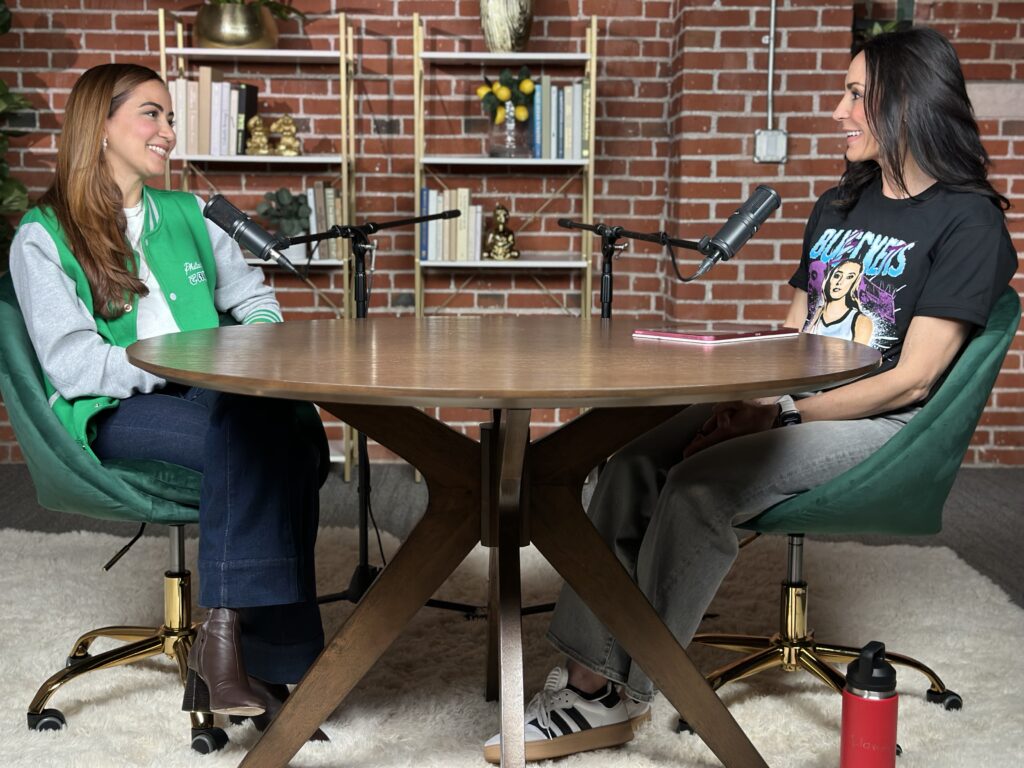
We’ve noticed something interesting at our Wayne studio: the same guest who seemed reserved on a remote recording becomes animated and open when they’re sitting across from their host in our lifestyle set. There’s something about shared physical space that creates psychological safety.
The science behind it: Mirror neurons fire when we’re in the same room as someone else. We unconsciously match energy, breathing, and body language. This creates a connection that your audience can feel, even through a screen.
The Winning Strategy: AI + Human Connection
The most successful podcasters aren’t choosing between AI and human connection—they’re using AI to amplify the human elements.
Here’s how:
- Use AI for the grunt work (transcription, basic editing, social clips)
- Invest the time you save into relationship building (better pre-interviews, more thoughtful questions)
- Create environments where authentic connection happens (comfortable spaces, good lighting, professional but relaxed atmosphere)
- Let AI handle distribution (auto-posting, SEO optimization, analytics)
The Bottom Line for Content Creators
AI is an incredible amplifier, but it can only amplify what’s already there. If you’re creating genuine, engaging content, AI will help you reach more people and produce more efficiently.
But if you’re relying on AI to create the magic for you, your audience will notice—and they’ll tune out.
The podcasters who thrive in 2025 and beyond will be the ones who master both: using AI to handle the technical production while doubling down on creating real human moments that audiences crave.
Ready to combine the best of both worlds?
At Main Line Studios, we’ve integrated AI tools into our workflow to help podcasters create more efficiently—while providing the environment and expertise that makes authentic connection possible.
Book your next recording session and experience the difference when cutting-edge tech meets genuine human connection.

Stacey Grant is the owner of Main Line Studios & The Podcast Factory in Wayne, PA. She’s worked with hundreds of podcasters to create content that combines technical excellence with authentic storytelling.
CATEGORY
7/18/2025

COMMENTs